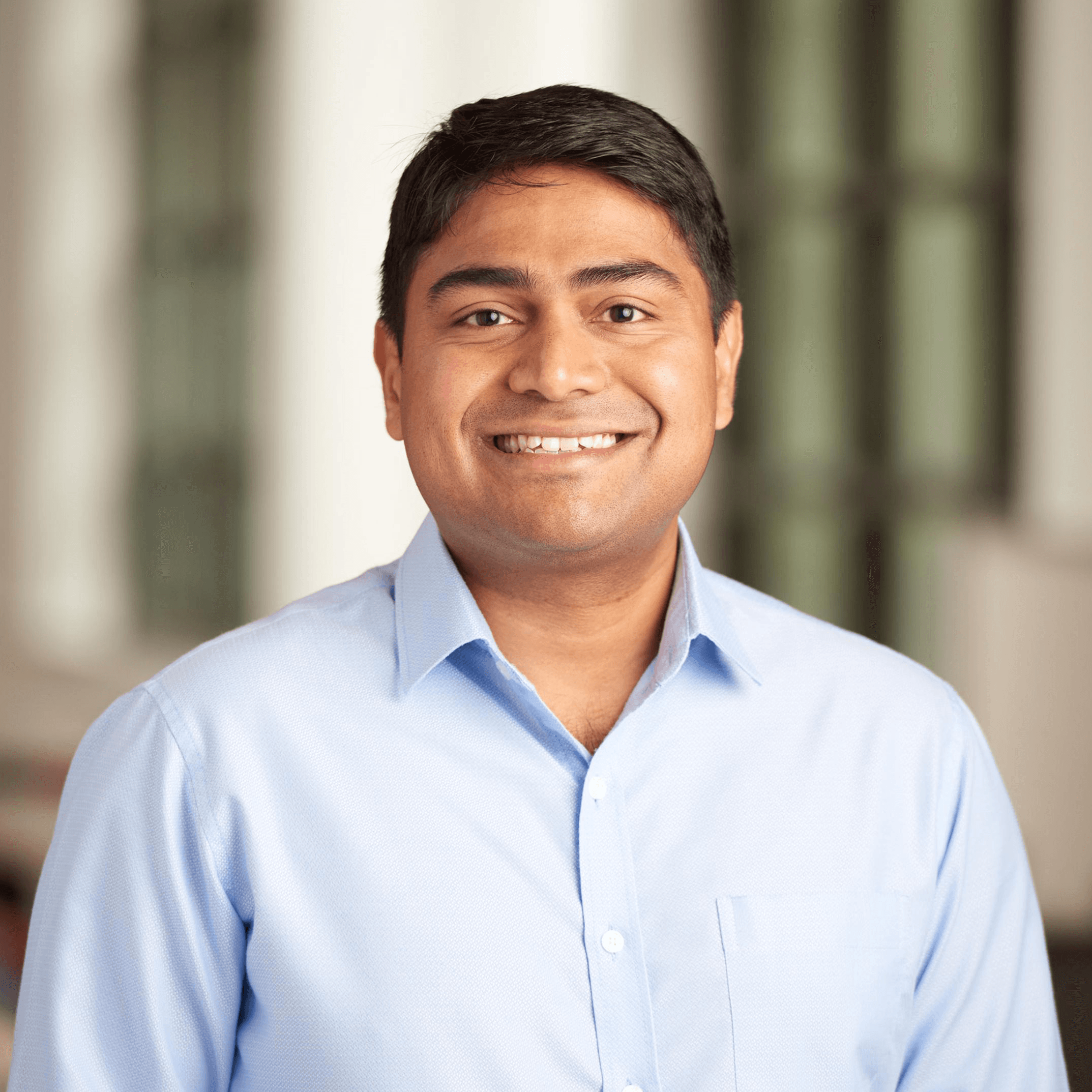
Avinash Balachandran
Avinash Balachandran, Ph.D., is Vice President of the Human Interactive Driving (HID)
division at the Toyota Research Institute (TRI), where he leads the development of
human-centric Physical AI that redefines how people and intelligent vehicles work
together. His work is driven by the belief that the future of autonomy lies in human
amplification, not human replacement. He oversees TRI’s driving-related research,
guiding teams across machine learning, robotics, and human–machine interaction to
advance how vehicles are designed, engineered, and manufactured while improving
safety, confidence, and driver enjoyment.
Before joining TRI, Dr. Balachandran was an early engineer on Uber’s self-driving
program, contributing to the launch of its first autonomous ride service in Pittsburgh in
2016, and later led autonomous driving teams at Faraday Future. Across these roles, he
has consistently worked to translate cutting-edge research into deployable technologies.
A globally recognized industry leader, Dr. Balachandran is a frequent keynote speaker,
advisor, and panelist on autonomy, human-centered AI, and the future of mobility. He
delivered keynote addresses at the FAST-Zero Symposium in Kanazawa, Japan (2023),
the SAE International World Congress Experience (WCX) (2024), the Open Data
Science Conference (2025), and participated in high-profile discussions at the Financial
Times Future of the Car Summit (2024). His invited talks span premier technical and
academic forums, including the MIT Mobility Forum (2022), IFAC World Congress
(2023), and IEEE ICASSP / Signal Processing for Autonomous Systems (2023), where
he has articulated a human-centered vision for embodied AI in the physical world.
Dr. Balachandran holds a Ph.D. and M.S. in Mechanical Engineering from Stanford
University and a B.S. in Mechanical Engineering with a minor in Computer Science from
Cornell University. He is a Stanford Graduate Fellow and serves as an Adjunct Lecturer
at Stanford University, contributing to the next generation of engineers and researchers.